
Line Follower Robot
Autonomous robots racing a marked track at the highest possible speed.
Up to 2 students
7–18 years old
Participants, both from secondary and high schools, are invited to showcase their engineering prowess in the Line Follower Robot competition. Design and program a high-speed robot, utilizing custom parts such as Arduino, to adeptly detect and follow a path delineated by a black line. The robot's dimensions must not exceed 25 x 30 cm, and participants are expressly prohibited from incorporating turbines into their designs.
See It In Action
What the Competition Looks Like
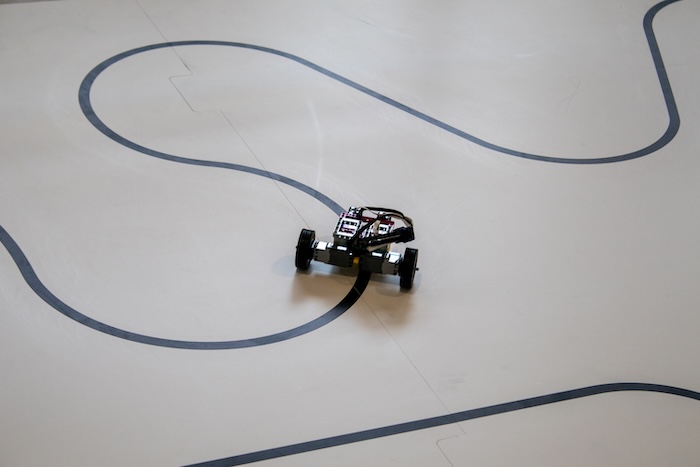
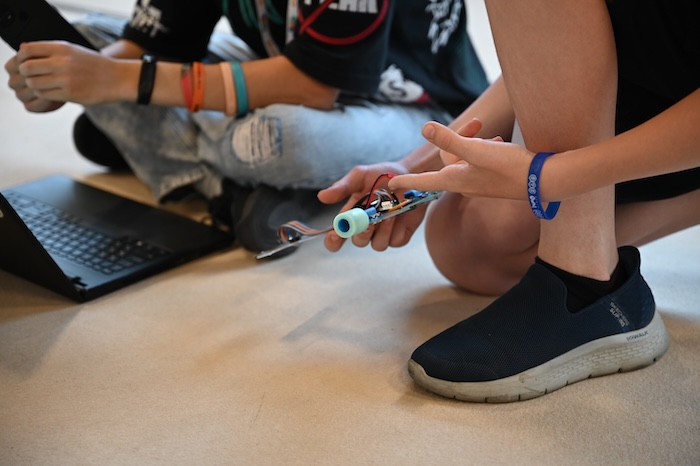
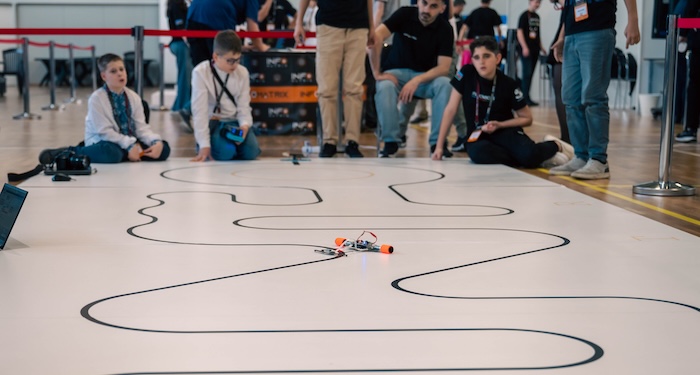
From Previous Years
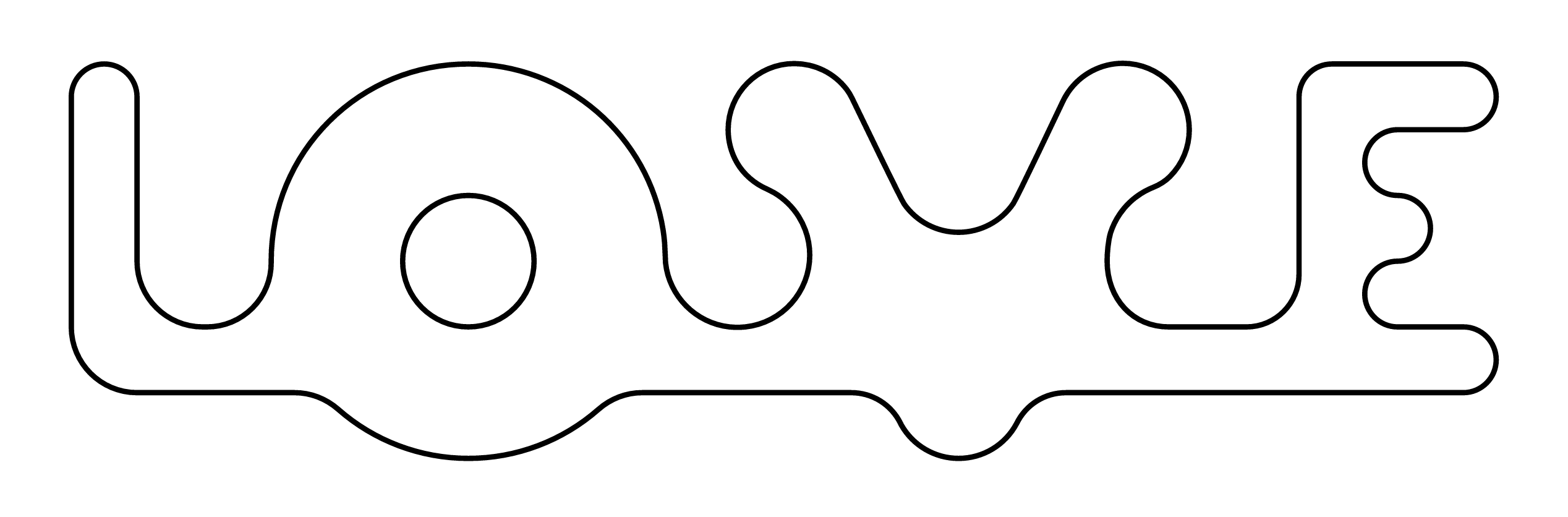
Sample Track Layouts
Real track outlines used in past Line Follower contests, shared as a starting point for practice. Download the vector file to print or laser-cut your own track.
Rules and Regulations for
Line Follower Robot Competition
Last modified on: 03.03.2025
View full rules document →1. Competition Overview
The Line Follower Robot competition challenges participants to build an autonomous robot that follows a black line on a white surface as quickly and accurately as possible. The competition evaluates speed, precision, and autonomous navigation abilities.
2. Robot Specifications
Materials & Components:
- Participants may use any materials, electronics, and sensors to construct their robot.
- The robot must be custom-built by the participant(s). While individual parts and modules can be purchased, commercially available pre-built robots or line-following kits are not allowed. Any robot found to be commercially available or pre-built without significant modifications will be disqualified. The judges' decision on this matter is final.
- The robot must operate autonomously without external control during the run.
- The use of turbines, fans, or any propulsion mechanisms other than wheels is prohibited.
- No external guidance systems (such as lasers or remote control) are allowed.
Size & Weight:
- Maximum dimensions: 25 cm x 30 cm
- No weight limit
Identification & Display:
- Each robot must display an identification number provided by the organizers in a visible location on the outer casing.
Power & Communication:
- Robots must operate using an onboard power source.
- Wireless communication is prohibited, except for infrared (IR) remote controls used only to start or stop the robot before or after its attempt. The IR remote must not provide any active control or guidance during the run. Any robot found using Bluetooth, Wi-Fi, or other wireless communication for real-time control will be disqualified.
3. Track & Environment
Surface & Line:
- The surface will be white.
- The track line will be black, 2 cm wide with a tolerance of ±5%.
Track Materials & Layout
- The track may be made of banner material, trovicel, wood, or similar surfaces.
- The track layout will consist of straight lines and curves, without any obstacles.
Boundary Rules:
- If the robot veers off the line, it must return to the track within 20 cm of where it exited.
- The robot cannot take shortcuts or skip sections of the track.
- If the robot fails to return to the track in 10 seconds, the attempt will be considered failed.
4. Competition Format
Race Structure:
- Each robot will have three attempts to complete the track.
- The fastest recorded time from any valid attempt will be considered.
Starting Position:
- The robot must start at the designated starting line.
- The robot must begin moving within 5 seconds after activation.
Repositioning & Resets:
- If a robot veers off the track, the participant is allowed to manually reposition it to the point where it initially left the path.
- This repositioning is allowed up to three times per run.
- If a robot's performance is affected by external interference not caused by the participant (e.g., a technical fault in the track), the judges may allow a reattempt.
Time Limit:
- The robot must complete the track within a maximum of 3 minutes per attempt.
- If the robot fails to complete the course in this time, the attempt will be considered invalid.
5. Scoring & Winning Criteria
Ranking System:
- The robot with the fastest valid completion time will be declared the winner.
- In case of a tie, an additional round between the tied robots will determine the final ranking.
Penalty & Disqualification:
A robot will be disqualified if:
- It receives three failed attempts in a row.
- It is found to use prohibited components (such as wireless communication or external guidance).
- It damages the track or interferes with another participant's run.
6. Conduct & Fair Play
Participant Behavior:
- Participants must not touch or interfere with their robot once an attempt has begun.
- Communication between participants and coaches is strictly prohibited during competition rounds.
- Coaches are not allowed to cross the line designated by the organization. They must not communicate with participants during the competition time, which is defined as the period when official competition rounds are taking place.
- Participants and coaches must conduct themselves in a professional and respectful manner. Any form of aggressive behavior, verbal abuse, or unsportsmanlike conduct towards organizers, judges, or other participants may result in disqualification from the competition.
Repairs:
- Participants will have access to a designated repair area where they can fix their robots between rounds.
- Coaches may verbally assist by providing guidance or advice but are strictly prohibited from physically repairing or modifying the robot.
- Judges may monitor the repair area to ensure compliance, and any violation may result in penalties or disqualification.
Judges' Authority:
- Judges have the final say in all disputes, penalties, and disqualification decisions.
- Any challenge to a judge's decision must be presented immediately after the round.
7. Safety & Compliance
Robot Safety:
- Robots must not have sharp edges or components that could damage the track or harm participants.
- Robots must not emit harmful signals, lights, or ultrasonic noise that could interfere with other robots.
Inspection & Approval
- All robots will be inspected before the competition to ensure compliance with the rules.
- Any robot failing to meet the specifications will be given one opportunity to adjust before disqualification.
Jury Evaluation:
- Jury members may ask students technical questions to verify that the robot has been designed and built by the student. Participants must be prepared to demonstrate their understanding of the robot's design and functionality.
8. Other Rules
Restrictions:
- Communication between participants and coaches is prohibited during competition times. Competition time refers to the period indicated as "Competition" or "Contest" in an official Infomatrix schedule.
- Coaches/supervisors may provide guidance to contestants outside of the contest time, but they are not allowed to repair the robot for them.
- Coaches and supervisors are not permitted in the competition area during the contest. Depending on the crowd, the area may either be isolated within the same hall by a band or occupy the entire hall.
Disqualification:
- Any participant, student, supervisor, coach, or robot found not adhering to the above rules will be disqualified.
- Any act of violence, bullying, harassment, disrespect or cheating will result in disqualification.
- Judges ' decisions are final, and they reserve the right to disqualify any contestant, supervisor or robot not adhering to the rules or exhibiting unsafe behavior.
- If any situation arises that is not covered in the rules, the organization and jury have the authority to decide on the appropriate course of action. Their decision is final and cannot be contested.
9. Agreement & Compliance
- Coaches must sign the official competition rules before their team can compete.
- By signing, they agree to ensure their team follows all regulations and respects judges' decisions.
- Any violation may result in penalties or disqualification.
registration_status: open
Ready to enter Line Follower Robot?
Registration for Season 2027 is open until 15 March.
Open the registration portal