Home
Categories
Guide
Finalists 2026
Download
Contact
Home / Categories / creAIthon
Hackathon

creAIthon

creAIthon
creAIthon — Infomatrix 2026

creAIthon

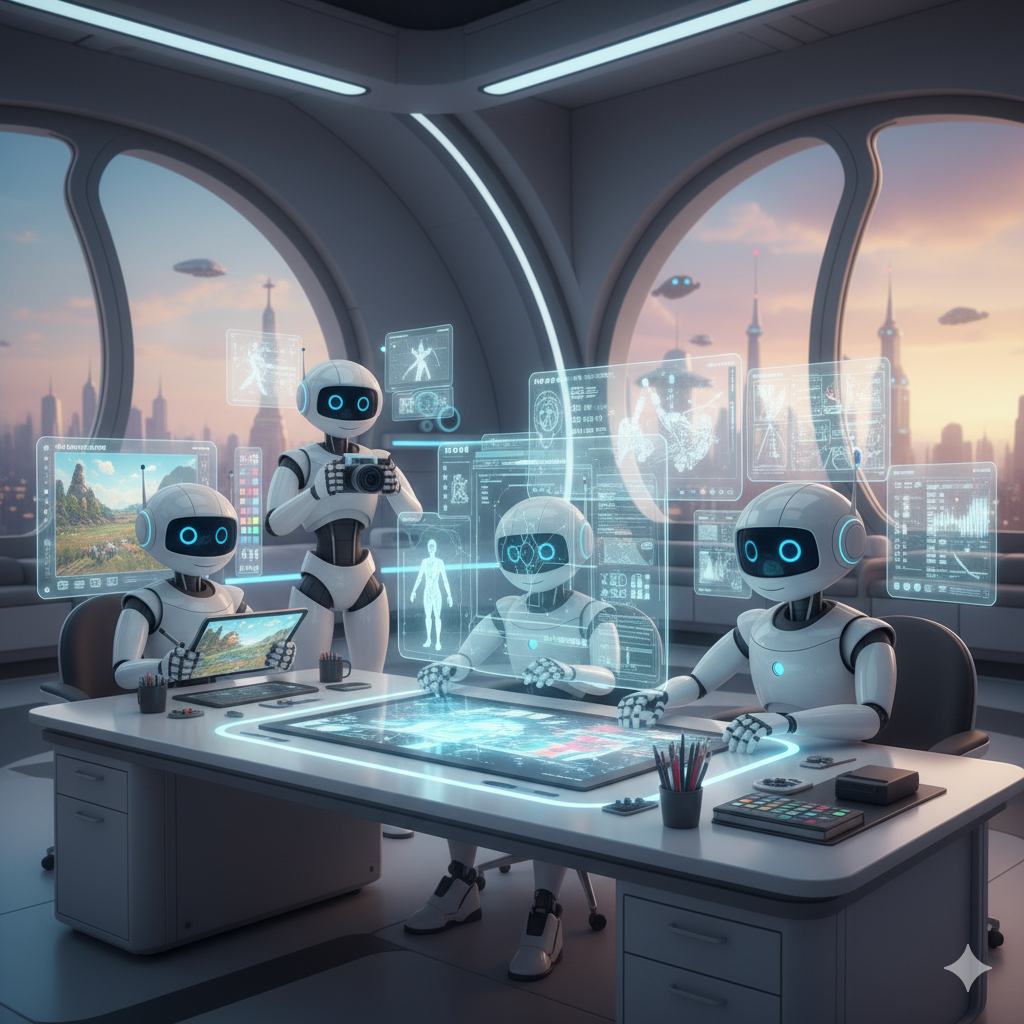
CreAIthon is a time-boxed, no-code (or low-code) generative-AI storytelling hackathon. Teams create a complete digital media piece—e.g., short film, comic/illustrated book, animation, audio story, or visual novel—within ~24 hours using AI tools responsibly and transparently. Participants must cite all models, prompts, and sources, and are judged on originality, narrative impact, craft, technical implementation, and ethical/professional AI usage. (Media projects only; app development isn’t the goal here.) Eligibility: Exclusively for secondary and high school students — no university participants.
// Team Size
Up to 4 students per team
// Age Range
7–18 years old
Evaluation Rubrics
7 criteria
01 Originality / Creativity +
Assess the strength and freshness of the creative idea, regardless of format (film, comic, poster, interactive, etc.). Reward distinctive concepts, inventive perspectives, and imaginative use of the medium or techniques that avoid clichés and show a clear authorial voice. Consider how the idea elevates the work and gives it a memorable identity.
02 Narrative Structure & Story Flow +
Assess how well the story is structured and paced: a clear beginning–middle–end, coherent scene/shot order, effective transitions, rhythm and tension, and continuity. For non-linear or interactive works (e.g., visual novels, branching videos), evaluate choice design, branching coherence, and whether the flow keeps audiences oriented and engaged.
03 Visual Impact +
Evaluate the overall aesthetic strength and clarity of communication across the chosen medium. Consider composition and layout; color and contrast; typography/lettering; illustration/imagery and (where relevant) cinematography; motion/animation rhythm; and sound/music synergy for audiovisual works. Judge whether it grabs attention, guides the viewer’s eye with clear hierarchy, remains legible and accessible across devices/resolutions (where applicable), and reinforces the story’s tone and message.
04 Message and Idea +
Assess the clarity, focus, and significance of the core message or theme. Does the work say something that truly matters? Evaluate the depth and nuance of the idea, the originality of the perspective, and how well the content and medium choices support that message. Consider audience takeaway (emotional or intellectual impact), coherence (no mixed signals), and—where relevant—research or lived experience that strengthens credibility.
05 Technical Skills +
Measure the student’s hands-on proficiency with the tools and techniques of the chosen medium—and verify authorship. Look for deliberate craft (editing/compositing/animation for video; layout/lettering/illustration for comics/posters; sound design; or scripting/engine logic for interactive pieces), clean workflow and file organization, correct export settings (resolution, frame rate/bitrate, color/format), and stable performance. Evidence the student did the work should be visible: editable project files (layers/timelines), raw assets, version history, and the ability to make a small live change or explain key settings during judging. Tool choice should suit the goal; complexity is rewarded when it adds quality. (Ethical credit/citation for AI belongs in Responsible AI Usage.)
06 Responsible AI Usage +
AI is encouraged. Evaluate how ethically and professionally AI tools (image/video/audio/text) are used and credited: (1) Transparency—clear citation of tools/models/versions and representative prompts/seeds/settings in docs; (2) Appropriateness—AI chosen for tasks where it adds real value (not a shortcut that weakens the craft); (3) Human oversight—student curates, edits, and quality-checks outputs (no raw, unreviewed generations); (4) Rights & consent—respect licensing/attribution for datasets/assets; no unconsented likeness/voice cloning or deceptive deepfakes; (5) Safety & bias—avoid harmful/biasing content; fact-check claims when used informationally; (6) Integration & reproducibility—AI outputs integrate cleanly into the piece and the process can be reproduced from the provided notes. Projects without AI are not penalized; judges assess equivalent craft and process evidence instead.
07 Oral Presentation +
Evaluate the clarity, structure, and credibility of the live presentation (in English). The student should: (1) introduce the story/message and audience; (2) explain the creative process, toolchain, and key decisions (including a brief note on any AI use and why); (3) demo the work smoothly (playback/navigation, no major technical issues); (4) show evidence of authorship by referencing project files/timelines/layers or performing a small live change if asked; (5) manage time well; and (6) handle Q&A thoughtfully—addressing challenges, limitations, impact, and possible improvements. Clarity and engagement matter more than scripted reading; accent is not evaluated, intelligibility is.